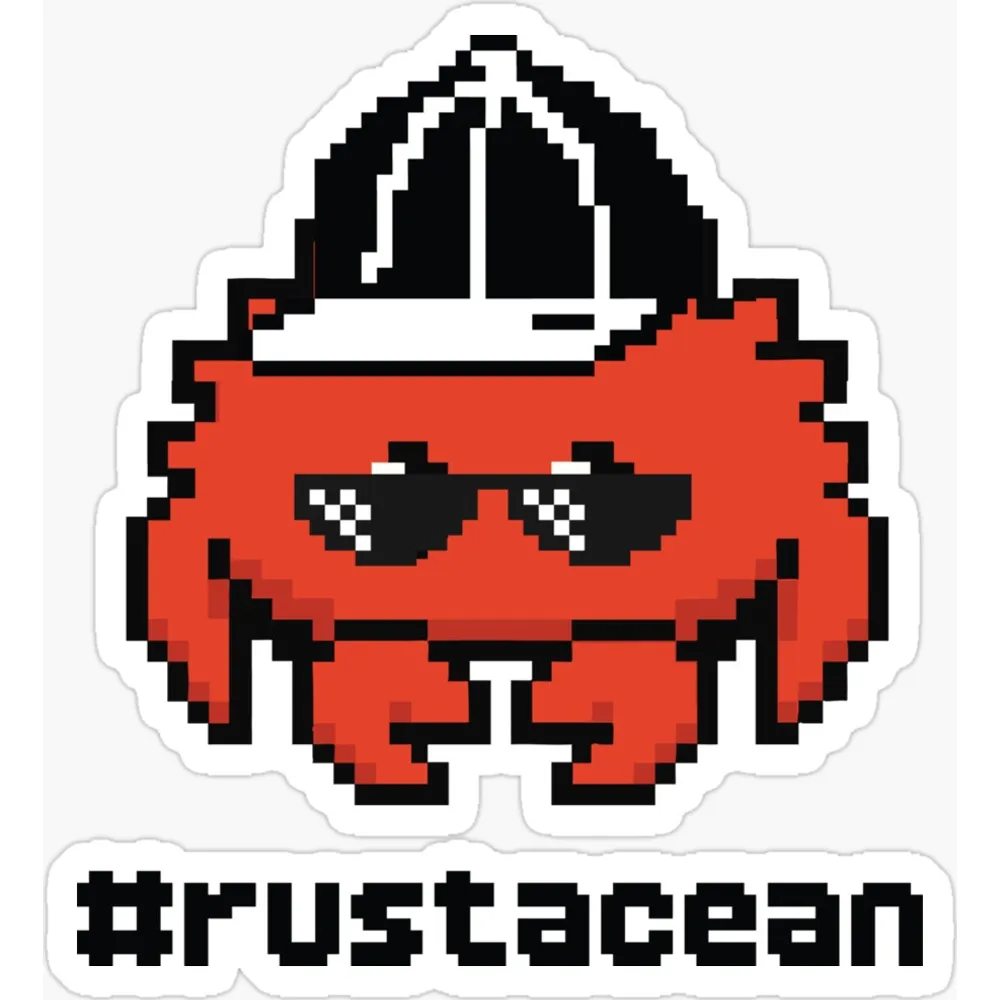
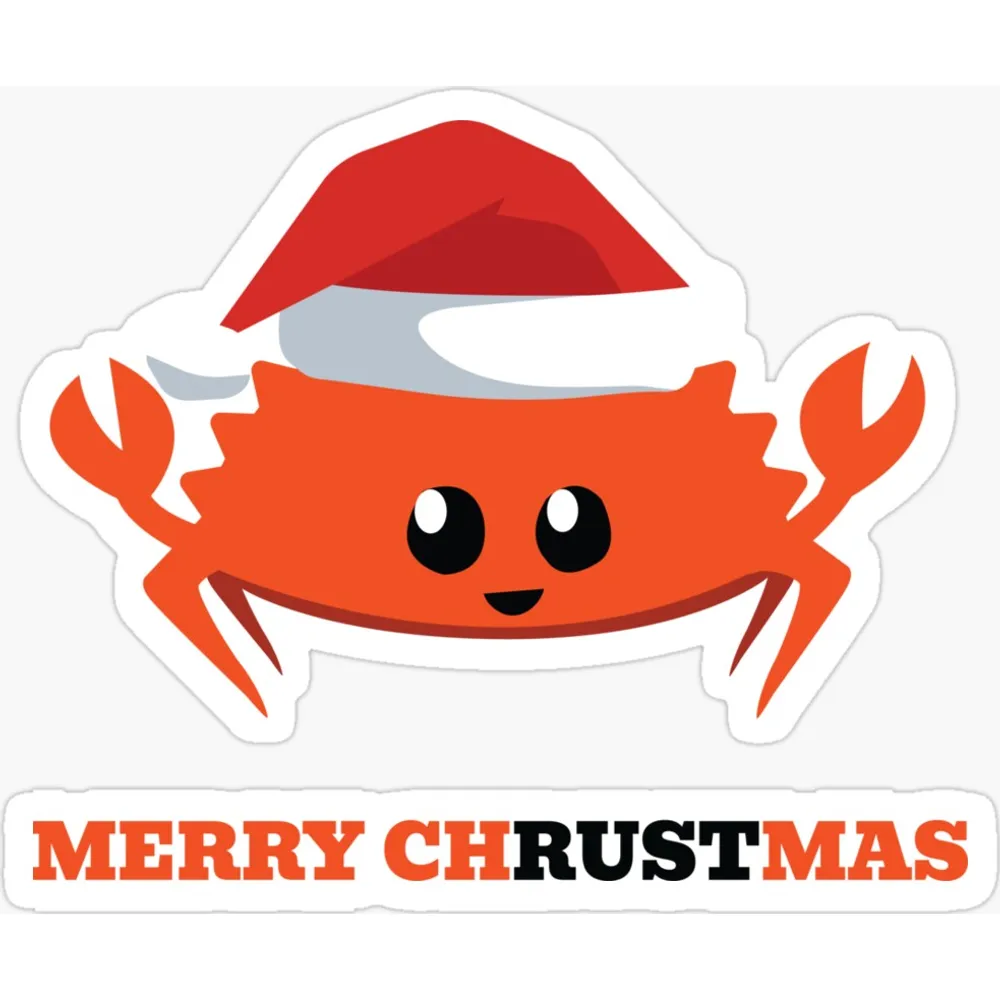
Who is Ferris, and why Rust's mascot is unofficial
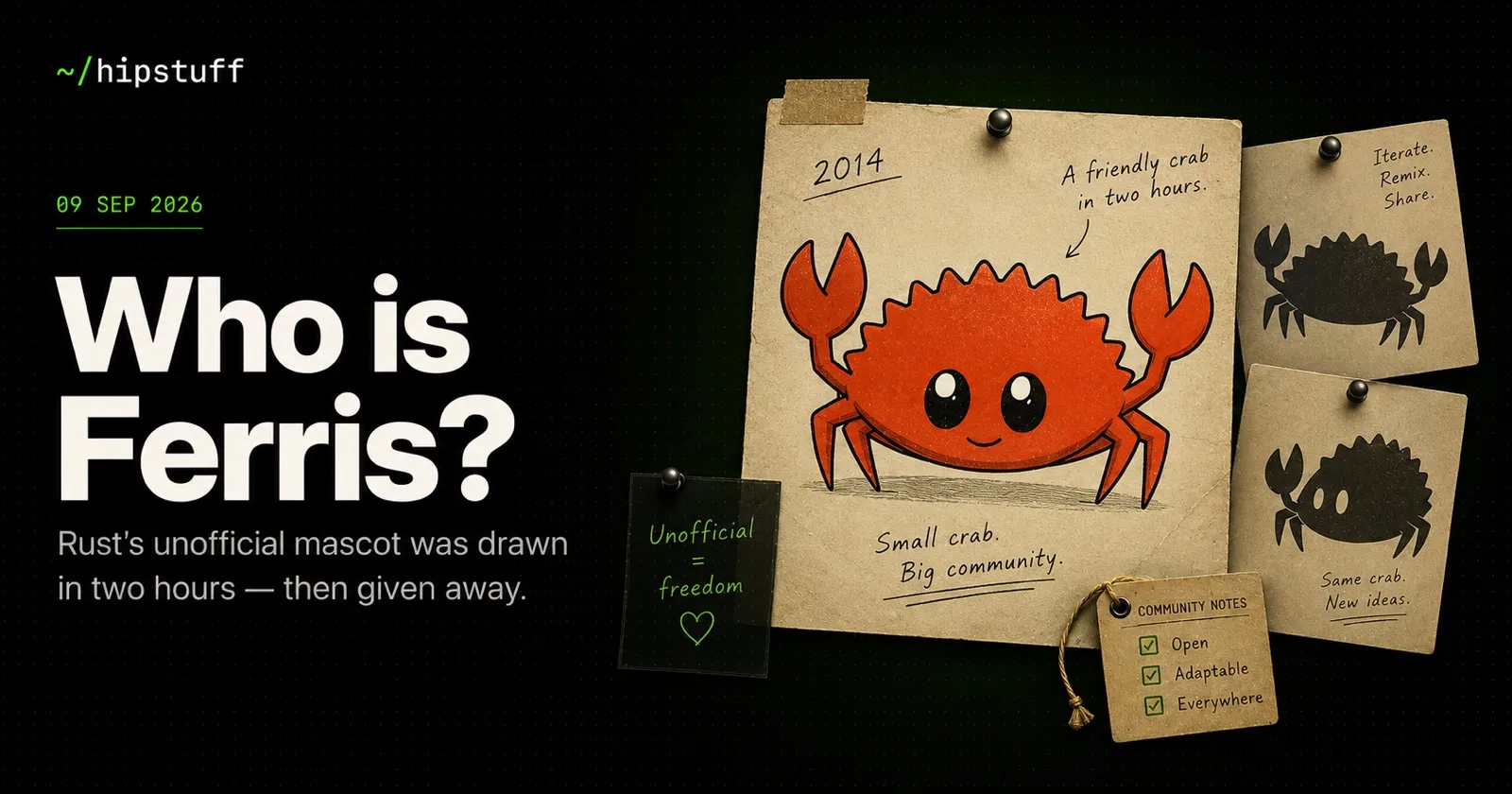
Ferris is everywhere Rust is: on laptop lids, conference badges, book covers, terminal demos and plush toys. The crab is recognisable enough to function as the language’s mascot, yet the Rust project still describes Ferris with one careful adjective: unofficial.
That is not an oversight waiting to be fixed. It is most of the reason Ferris worked.
A crab drawn for an IRC channel
In late 2014, designer and web developer Karen Rustad Tölva was hanging out
in #ptopology, a Freenode IRC channel used as the virtual living room for a
San Francisco group house. Several people there were working on pre-1.0 Rust at
Mozilla. They called themselves Rustaceans.
Tölva liked the pun. In an hour or two she drew them a red-orange crab with the teeth of the Rust sprocket running across its shell. There were no discarded concepts or careful rounds of sketches. It was a quick drawing made to amuse friends, and those friends asked if they could share it in the main Rust IRC channel.
That is the whole origin story. No brand brief, no mascot committee and no launch campaign. Tölva told it herself in a 2025 interview with the Rust Foundation, published for the tenth anniversary of Rust 1.0.
The visual joke is immediate. Rust programmers are Rustaceans; crustaceans have claws; the official Rust mark is a sprocket; put the sprocket on the crab. It is exactly as complicated as a good mascot needs to be.
Who named Ferris?
Nobody remembers.
Someone in the channel suggested Ferris, but Tölva no longer knows who. She also says she did not notice the second pun until years later: Ferris sounds like ferrous, meaning related to iron, and iron is what rusts.
The official Rust getting-started guide
now explains that wordplay to new users. It even introduces the
ferris-says crate, which prints a small ASCII crab saying hello. The mascot
may be unofficial, but the welcome is about as official as documentation gets.
Ferris can use any pronouns. That is not a later community rule grafted onto the character; it is how Ferris introduces themself on rustacean.net, the home of the original artwork.
The first Ferris was stranger
The 2014 drawing is slightly different from the crab most people recognise today. Its legs are thinner and more insect-like. Black separator lines divide the claws from the shell, and the orange body has a gradient.
Tölva revised the design in 2017. She made the joints more even, lowered the claws, simplified the colour for printing and gave the legs a friendlier, less-spidery shape. Her portfolio shows both versions, and both remain available to use.
This is an unusually honest bit of design history. There was no lost perfect prototype. The version that escaped into the world was the version someone could finish in two hours. The cleanup came after people had already decided they loved it.
Unofficial on purpose
Rust has an official logo and a trademark policy. Ferris belongs to a different category: a community symbol that the project acknowledges without trying to turn it into corporate property.
When community members discussed making the mascot official in 2018, one of the arguments against it was revealing. Ferris was already something people adopted, played with and remixed; official status would not improve that relationship and might put a barrier around it. The discussion is still public.
So Ferris occupies a useful middle ground. Rust’s own website calls the crab the community’s unofficial mascot. Official project services use the character. Nobody needs to pretend Ferris is obscure or unauthorised. But the mascot is not locked into a brand manual that tells a meetup organiser which direction the claws may point.
The licence did the distribution
The decisive choice was not the colour or the eyes. It was the licence.
Tölva dedicated Ferris to the public domain under CC0. The notice on rustacean.net waives copyright and related rights to the extent the law allows. People can copy the drawing, alter it, print it, animate it and build new characters from it without first negotiating permission.
And they did. Ferris became a plush toy, a Pride banner carrier, the narrator
of learning materials, terminal art and the starting point for countless local
variants. Tölva’s own site includes Corro, an unsafe Rusturchin whose sharper
spines represent unsafe code. The joke works because the original design is a
language, not a museum piece.
This is the pattern behind the mascots that travel furthest. The Go gopher’s permissive licence created an ecosystem of occupational and regional gophers. Ferris went further: no attribution requirement, no share-alike clause, no permission gate. We covered that larger pattern in our field guide to programming language mascots.
What Ferris says about Rust
Rust is a systems language. Its subject matter is memory, ownership, lifetimes and the parts of computing where a small mistake can become a security advisory. The obvious visual identity would have been industrial: metal, machinery, sharp edges, seriousness.
The official sprocket supplies some of that. Ferris supplies the correction.
Tölva wanted the crab to feel cute and accessible rather than edgy. She had seen how intimidating systems-programming culture could look from the outside and hoped Rust could make lower-level work appealing to more kinds of people. A friendly crab does not make a borrow-checker error easier, but it changes the voice in which the error arrives.
That tension is why the pair works. The gear says the language is built for machinery. The crab says the people around it might still be fun.
The mascot that escaped correctly
Most brand characters are designed to remain consistent. Ferris was designed once, released, revised and then cheerfully allowed to become inconsistent.
The result is a mascot with no official status and almost universal recognition; a drawing made in two hours that outgrew much more deliberate branding; and a public-domain character whose identity became stronger every time somebody changed it.
Ferris is not Rust’s official mascot. Ferris is something harder to manufacture: the mascot Rustaceans chose for themselves.